

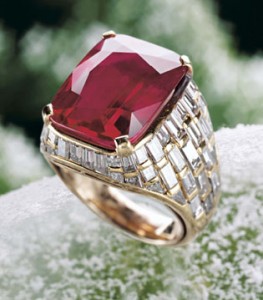
“When a ruby exceeds five carats, and is perfect, it is sold for whatever is asked for it,” Jean-Baptiste Tavernier wrote in 1676. That’s as true today as it was then.
London jeweler Lawrence Graff, for example, paid $3,637,480 at a 2006 Christie’s auction for this cushion-cut 8.62-carat Burmese ruby ring signed Bulgari, setting a per-carat record. Needless to say, the stone was renamed the “Graff Ruby” within hours.
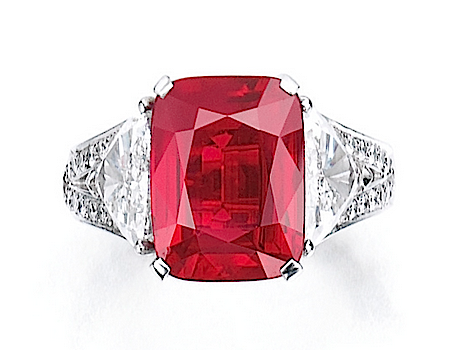
Graff then reset the ruby in a platinum ring (below), adding triangular diamond shoulders, and put it back on the black at Sotheby’s in November 2014, making back more than double what he paid. The Graff Ruby sold for $8.6mil, setting a new auction record for rubies.
Faint inclusions proved this ruby to be from Mogok in Burma (Myanmar) and showed no signs of heating, so its clarity and vivid red color are natural – extremely rare in rubies, especially Mogok rubies.
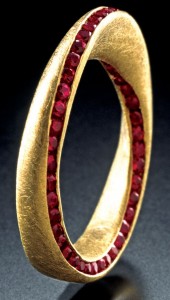
Natural, untreated rubies are among the rarest and priciest gems in the world – which has led to some hard-to-spot fakes, particularly glass ruby composites. Rubies and sapphires are actually the same mineral, corundum, and both have enjoyed favor in high places since ancient times.
Hindus believed rubies stood for heat and sensuality and represented the mighty sun god, Surya. A ruby inserted into the flesh was believed to bring invulnerability in ancient Burma.
In the 16th century, Italian gem expert Camillus Leonardus wrote that rubies would preserve their owners’ health, banish evil thoughts, control amorous desires and reconcile arguments.
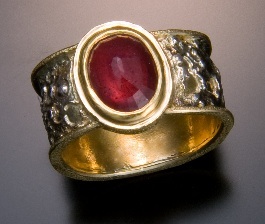
The darkening of a ruby was considered a bad omen. Catherine of Aragon, first wife of Henry VIII, is said to have predicted her downfall when a cherished ruby appeared to lose its inner fire.
Related posts
Beware: That ruby may be a glass composite
Related products